Showing posts with label Rules. Show all posts

This Haunted Land - Version 0.1

The Boy and the Heron, Studio Ghibli

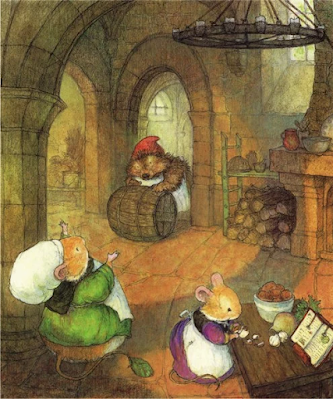
Here is the playtest version of my game about where you play tiny imps, goblins, bugaboos, pixies, and sprites who venture out to wreak chaos upon mankind. Click on the image below to get the rules and character sheet.

You can read this post to get an idea of what this game is about. Basically, the game is focused on your inventory, like Mausritter or Knave. Your character is defined by the items they carry - if you want to be a thief, you would carry thieves tools. A wizard would carry spells, a fighter carries weapons and shields, etc. 

The twist is that your "Items" can be intangible objects like Fears, Dreams, Stolen Youth, Lost Beauty, or The Howl of a Wolf. You are fae creatures, so you can reach right into someone's head and steal their strength, their courage, their memories. Instead of carrying thieves tools, you might steal the memories of a Master Thief or a patch of the night sky to hide yourself with.

These items define what your character can do. And each one is a little sentient: They have their own goals and needs, and they can rebel and riot against you if they are mistreated. The game is about managing this chaotic hoard while having fae adventures as a little gremlin creature.

Ulla Thynell (Finnish, b. 1982) Untitled, 2021 Watercolor and alcohol ink on paper

This version is very much a work in progress, and after playtesting it there's a lot of things I want to change and update. Here's some of the improvements I'm planning for future versions:

  • Mortal forms: At the moment, you only get the basic Sprite Form. In future versions, each character will get a mortal form by default as well. This can be an animal, a small child, a plant, etc - but something that lets them blend in with mortal society and mess with humans.
  • Improved starting items: The current starting items are quite simple and D&Dish - you'll notice that everyone gets a weapon. I want to improve this and make your starting items much more baroque and fae-like. You might start with a deceptively deep puddle. A cat's curiosity. A shadow. A bag of bones. I also want to integrate this better so that there's less tables to roll on at the start.
  • Boosted Sentience: The intent is that all your items are alive. They have their own desires that they try to work through you. Even if you just have a mundane item like a sewing needle, it's a living sewing needle that can fly around and sew people's shoes together. I want to push this more and make it clearer in the text.
  • Strings attached: I'm planning to overhaul and improve the guidelines for how you steal things from other people. How you reach in and steal a soldier's courage, a mother's love, a sage's wisdom, etc. 
  • More stuff. This is a basic version of the rules, so you only have a basic list of items and one form. The full version would have a huge range of different factions, forms and items. You're all shapeshifters, so one of the core methods of advancement would be to find different forms and learning to take the shape of a vampire, a skeleton, a ghost, etc, each with different abilities and powers. You'd go out into the world and earn forms and items by doing quests for different factions, or stealing them from those factions.

I'd love any feedback or thoughts you have on the rules so far! Let me know in the comments.

Community Service Carousing for Mausritter


The Carousing Table is an OSR classic. OSR games often reward XP for treasure, which can leave your players with tons of loot and not much to spend it on. Carousing solves that issue by adding a money sink - your players can always get rid of excess cash for a benefit. Plus it naturally generates adventure hooks at the same time!

Mausritter offers a wholesome twist on this idea with community improvements. Your mouse can earn additional XP by spending their treasure selflessly on improvements for the whole community. For every 10 pips spent this way, your mouse earns 1 XP.

This is lovely, but the rules don't offer any specific ideas on what you could spend money on to improve your community. So, here is a community improvement table! 

If someone wants to invest their hard-won pips back into the community, roll on this table 3 times to give them a few options for what to invest in, and let the players choose which ones they want. Each improvement comes with a potential benefit you could reward the players with, and an adventure hook to inspire you. 

Roll d66 (d6 x10 + d6):


Community ImprovementBenefitAdventure hook

11        
Dig a new well for the town. May make a wish once per session. Spirits may help you with your wish (giving you advantage on one critical roll to achieve it).You unearth an ancient cave with a lindworm (a blind, pale snake which breathes poisonous smoke). It speaks your tongue and knows many secrets.
12Build a bridge over a nearby river, or tunnel through difficult terrain.Easier travel (1 watch to cross hex instead of 2).Toad moves in under bridge and begins demanding toll.
13Help grow crops or create a community garden.1d3 free rations each time you visit town.Pumpkin harvest spirits haunt the fields and cause low-level mischief. If appeased, they guarantee a good harvest.
14Rebuild a church of the mother. Priest can provide 1d3 flasks of holy water each time you visitLearn of an ancient artefact of the mother, the holy thimble, in an adventure site nearby.
15Create a boat or vehicle for the community that can travel between towns to ferry goods.Store stocks a better selection of goods. Torches, lanterns and other utility items may have +1 use.Bandits plan an ambush to hijack the vehicle. Traders ask for PC protection.
16Fund a local carnival or harvest festival. Can win human artefacts as prizes at carnival. Fierce competition for the best costume and display. Some mice may plan sabotage to win the prize: The Golden Pumpkin. 
21Dig burrows for free community housing.Free rooms when you're in town.Burrowing accidentally uncovers the ruin of an labyrinthine mouse burrow from centuries past, haunted by old ghosts.
22Build a local theatre. Free masks, disguises and other theatre tools.Mysterious figure haunts the theatre, causing accidents and demanding that a certain mouse be made the star of the show.
23Improve accessibility of the village (ramps, better facilities for older mice, etc). Grateful local mice help you with your projects (building things, etc).Mysterious rat stranger with cane and eyepatch thanks PC's and hints at pirate treasure.
24Paint and repair local homes or businesses. Install secret passages that will help you and the town in case of attack.Discover a nest of bats hiding in an old home, fleeing enemies in another faction.
25Build a fire station to help handle bushfires and other disasters. Safety during rough weather events. Rowdy fire-fighting mice ask the PC's to assist them with a disaster (fire, flood, landslide, etc)
26Fund medical facilities. Full rests in town take half as long to heal you. May be able to heal strange, normally unhealable conditions.Doctor asks for assistance with mysterious experiments in dream serum. Mice enter hallucinogenic trance that leads them to the dream world.
31Build an arena where mice can compete in games of strength (woodchopping, rope climbing, duels, etc). +1 STR to all hirelings. Brawny mouse attempts to impress PC's by beating them in a contest.
32Fund your local library. Can research the answers to 1d3 questions each time you visit town. Librarian discovers occult tomes with dark knowledge and asks the PC's to seal them away safely. 
33Build watchtowers. Watch-mice will see any threats coming and warn the town with a gong. Watch-mice notice a travelling caravan of circus-folk in the distance that seems to have gotten lost and waylaid by bandits.
34Fund local arts and crafts supply.Free items: Paintbrushes, string, modelling clay, human pencils.Inspired artist creates painting of mythical unicorn-frog creature - claims to have seen it nearby.
35Create a home for local stray beetles. Free beetle hireling with +1 inventory slot.PC's hear rumour of a magical beetle nearby with mysterious powers (eg, can see ghosts). No mouse has ever tamed it.
36Protect, reclaim and rejuvenate local wilderness. Gain 1d6 rations when foraging instead of 1d3.Fae spirits take a liking to you, may kidnap you into fae realm. 
41Repair and fix clothes for mice of the village. Mysterious local tailor may craft costumes of unknown make and potentially magical abilities for the party.Must steal a piece of human clothing to complete the project (Sock, glove, stocking, etc).
42Create a field for local sports. Mouseball, that kind of thing.+1 Dex to all hirelings.PC's may gamble on games. Some mice try to rig the game for a big payout. 
43Buy better musical instruments for local bards. Free Bard hireling (Gives group +1 to reaction rolls). Bards go on tour throughout local settlements and request PC protection for their travels.
44Fund your local school.+1 WIL to all hirelings.Teachers ask PC's to recover lost texts, hidden in a frog library. 
45Build a tower for local hedge witches / wizards.PC may be taken on as an apprentice and gain a spell.Mouse Warlock requests a piece of a fallen star to complete the project. Meteorite shard can be found in nearby adventure location.
46Build local beehives.Earn d3 fresh honey rations each time you're in town.Queen Bee is kidnapped by a spider queen.
51Create more mouse holes and tunnels in human territory.Easier to move unseen through human territory.Hamster escapes and settles in town, has wild tales of treasure in human child's room.
52Fund local leatherworking.Can upgrade armour. Gains +1 DEF against specific damage source (Eg fire).Armourer tells you the location of a magical shield or piece of armour.
53Fund local blacksmiths.Can upgrade weapons. Deals +1 damage against specific target (eg birds). Blacksmith tells you the location of a magical weapon.
54Fund local brewery.Gain 1d3 jugs of ale when you're in town (gives advantage on WIL saves and disadvantage on DEX saves for d4 turns).While drunk, you overhear some noblemice discussing a terrible scheme against a good faction.
55Fund a local bat cult.Can hire 1 bat mount as a hireling for 40p per night.Must seek out a great sacrifice to summon the Night Queen.
56Fund fungus farm.Gain 1d3 mushrooms each time you're in town. Some heal d6 STR when eaten, others deal d6 STR damage when eaten. Fungus farmers tell you of a mysterious Truffle Lord, a fungus-creature who rules the mushroom realm under the farm. 
61Fund local cartographer's guildGM provides more detailed maps and information about hazards in the region.Cartographer gets lost mapping unknown place and must be rescued. Has a detailed map of a nearby adventure site.
62Fund community newspaper.GM provides more information about faction goals and actions each session.Newsmice ask you to help with investigative reporting of local murder / conspiracy.
63Fund activism against corrupt noblemice.May be able to topple local noblemouse and take over their manor.Resistance cell asks you to help them free prisoners from noble's dungeon.
64Create shrines to appease local spirits.Spirits in the area will watch over you and protect the town in subtle ways.Offended trickster Bogart causes havoc (curdles milk, spoils eggs, etc). Must be defeated or appeased before project can be completed.
65Exorcise ghosts from local graveyard.May speak to the spirit of a previous dead PC / NPC and gain knowledge.Exorcist requires PC's to defend the ritual circle from angry spirits while they complete the exorcism.
66Fund local worm farms.Free worm mount hireling. Can burrow through earth on command.Worm farmers discover giant worm king that knows no master. Can it be tamed?

I would allow the players to put as much money as they like into these, and just adjust the scale of the project based on how much money they put in. Say if they wanted to dig a well: a tiny amount of money could get a small well started, but a large amount of money could create a giant well and get the project finished much faster. Each improvement would take about 1-3 weeks to complete (depending on the scale and amount of money put into it). 

I would only give them the benefit if they invest a meaningful portion of their wealth into the project, or do something extra to get the project completed (Eg contributing items or their own labour). Otherwise, the XP should be enough of a benefit.


Positive Conditions


I also want to reward PC's for spending a little extra time or money on relaxing in town and living the good life. You've gotta have those Redwall feasts. You know what I'm talking about:

"October ale and strawberry cordial, tarts, pies, flans, and puddings, served out and replaced by fresh delights from Redwall’s kitchens. Turnovers, trifles, breads, fondants, salads, pasties, and cheeses alternated with beakers of greensap milk, mint tea, rosehip cup and elderberry wine."

My idea is to award positive conditions. I would give these out when the PC's spend some extra time and / or money on living the good life. Getting the best room at the inn, throwing a feast or a party, putting on a play, that kind of thing.


Well-fed. Mark 1 use to gain advantage on a STR save or to remove the Hungry condition. Earned from eating luxurious or exotic foods or quaffing fine wines and ales in a comfortable setting with fine company. 


Well-rested. Mark 1 use to gain advantage on a DEX save or to remove Exhausted. Earned from relaxing experiences like taking a lush bath, getting your fur groomed extravagantly, or sleeping in a burrow you own, laid out with the specific furnishings you love.


Well-content. Mark 1 use to gain advantage on a WIL save or to remove Drained. Earned from sublime and life-affirming experiences with your loved ones, like enjoying a grand festival, putting on a play, or finishing some great creative work.


For a normal example (like spending extra money for the best room at the inn) I would give these only 1 use. More extravagant efforts (Like throwing a huge feast for the whole town) could give the PC's a positive condition with 2 or even 3 uses - but the PC's would have to spend a good chunk of money or effort to earn that. You can use the online Item Studio to create these and print them out.

Making sure your adventurer is having a good time normally isn't rewarded in D&D, which is why you sometimes end up with adventurers sleeping in a ditch instead of spending money on an Inn. Having a good time, being cosy and throwing feasts is such an important part of the genre, I think it's worth rewarding the players for doing that. 

Treating a mystery like a dungeon - Random Encounters


“When in doubt, have a man come through the door with a gun in his hand.”
-Raymond Chandler 
Here's something I've been thinking about lately: Are there any ideas from OSR Dungeon Design that we can take and use to improve our mystery games? 

Dungeon design has recieved a huge amount of discussion and refinement over the years, and there may be some fruit we can pluck for other genres. Here's one thought from this vein:

Random Encounters


Roll for encounters every time the PC's perform a major action, and whenever the PC's do something that could draw the attention of the malevolent forces behind the mystery.

Major actions are things like moving to a new location, spending time researching in a library, or engaging in a fight. You can think of each major action as one "Scene". 

To roll a random encounter, roll d6. On a 1, an Encounter occurs. On a 2, an Omen occurs (signs or hints of an encounter).

Each adventure would have a random encounter table, but here is a simple example that could be used for any Film Noir style mystery where the PC's are tangling with an evil organisation. 


Encounters
  1. A thug bursts through the door, firing a gun. They plan to kill whoever the PC's are talking to, in order to silence them - then escape.
  2. The bad guys sneak in and bug the PC's phones or lines of communication.
  3. The bad guys ransack the PC's home or place of business. They will steal any valuable items or information the PC's have. 
  4. An NPC with vital information is kidnapped. PC's will be sent a letter with demands ("Leave town or we kill them", that kind of thing). 
  5. One of the PC's friends or contacts is bribed to turn traitor. They will feed the PC's incorrect information to send them into an ambush.
  6. The PC's car or method of transportation is rigged with a bomb. It will explode the next time it's used.
The encounters should be dramatic moments where the NPC's advance their goals or try to stop the PC's investigation. 

Omens
  1. There are signs that a low-ranking person from the bad guys was just here (footprints, cigarette butts, car tyre marks, graffitti, things like that). 
  2. There are signs that a high-ranking person from the bad guys was just here (footprints, cigar ash, witnesses saw a fancy car, things like that). 
  3. A group of thugs trail the PC's in a black car. They will attempt to escape if the PC's catch on.
  4. A high-ranking member of the bad guys begins to follow the PC's, pretending to read a newspaper. They will attempt to escape if the PC's catch on.
  5. The NPC's in this area are frightened. They've just been intimidated by the bad guys. 
  6. One of the PC's friends or contacts starts to feel like they're being watched. The bad guys are staking out their house.
The omens should be clues that foreshadow danger and give the PC's a hint about your mystery. 

In a real adventure you would customise the table to your needs, with 6 encounters and omens that fit your mystery. In a lovecraftian adventure, you could also roll for an encounter whenever a PC interacts with the mythos (Eg, saying Hastur's name aloud). 

How to write one yourself


One easy way to start is to make a list of the important pieces of information that hold up the mystery. For example:

  1. The Duchess is having an affair with Lady Aubergine
  2. Lord Smothersberry was smuggling in cocaine through the docks
  3. Lord Smothersberry was killed by Lady Aubergine in a duel
  4. ...
Etc, etc. Try to make a list of 6 pieces of important information. Then, create 1 encounter for each piece of information. Each encounter is related to that piece of information in some way.
  1. The Duchess attempts to destroy any evidence the PC's have gathered (raiding their home base, burning papers, etc)
  2. Lord Smothersberry's smugglers confront the PC's, attempting to rob or silence them
  3. Lady Aubergine tracks down the PC's and challenges one of them to a duel.
Finally, use this list to create the list of Omens. The omens can just be signs or clues that are relevant to each encounter.
  1. Signs that the Duchess has been here recently.
  2. Signs that the Smugglers have been here recently.
  3. Signs that Lady Aubergine has been here recently.
Etc. It should be pretty quick and simple to write this up for a published adventure, as long as you know the key pieces of information you need. 

The benefit of this approach is that it makes sure your encounters tie in to the core fabric of your mystery - they aren't red herrings or distractions, they are moving the game forward in a meaningful way. You don't have to follow this though - you could also make a list of the core factions or NPC's in your mystery, and make encounters that relate to each one.

The Benefits


I think this does quite a few things elegantly.

1. It makes it feel like the NPC's are actively working towards their goals. 


It's easy for a mystery with many moving parts to feel a bit static. The GM has a lot going through their mind. It's tough to think about what all the different NPC's would be thinking and doing while the PC's are investigating.

The random encounter table does this for you. You just fill it with entries that represent the NPC's attempting to complete their goals (For example: Lady Blackbeard finally hunts down the amulet of Zorathstra.) It makes the situation feel dynamic and vibrant without needing to spend a ton of work.

2. It creates a time pressure and forces the PC's to make interesting decisions.

Again, time pressure is something critically important that can be hard to pull off. If there is no time pressure, there's no tension, and the PC's can spend all the time in the world doing whatever they want.

Some mystery adventures have specific timelines - the ritual happens in 3 days, this happens at 11:30, etc. This is handy, but it can easily go off the rails if the PC's go off-script. 

An encounter roll gives the PC's that feeling of time pressure constantly and easily. Just like a normal dungeon, you should be transparent and open with your PC's about this. "Yes, you can read through that occult tome, but it'll take some time so I'll roll an encounter check. Do you still want to do that?" 

And as a bonus it adds a nice push-your-luck element, because you also roll if the PC's do anything that is likely to draw attention from the malevolent forces behind the mystery. "Yes, you can infiltrate the mob's speakeasy, but that's likely to draw attention so I'll roll an encounter check. Do you still want to do that?"

3. It keeps the mystery moving.

If you run into a situation where your players have hit a dead end and don't know what to do next - that's when you can pull out a random encounter to push things along. 

All of these encounters should, of course, come with clues that help push the PC's towards the main mystery. The man who comes in firing a gun has been sent by the mob boss. The PC's can interrogate him for information or follow him back to his lair or find evidence on his body. Either way, things are moving. 

Rules for Magic, and the Speaking Gun


Knock Knock is this little cartoon game that manages to evoke utter terror in me. It does it with a simple trick: All the rules are told to you in-character, by multiple flawed and contradictory sources.

So, your little avatar tells you how to play the game. You move from room to room, fixing broken lights. Then he warns to to turn off the lights as soon as you fix them. He has a dream where something outside can see the lights go on.

Soon, you start finding pages from your diary. They make a counter-claim: monsters spawn in dark rooms, so you should leave all the lights on. They also start giving you the rules for some other games. Your avatar can't remember writing any of this. 


You hear voices: a man and a girl. They tell you things that seem to help, but they also laugh when you stumble into one of the shaggy things roaming around your house.

The result of putting the rules in these three sources: I can play the game, and I roam around the house doing things that seem to be working, but everything is shrouded in this mystery that gives me constant, terrible paranoia. Is this actually the right thing to do? Am I missing some crucial rule? What effect is all this actually having? Instead of following orders, I'm piecing them together something mysterious: A detective, instead of a soldier *

  • Follow the rules of the game! Of course you must first understand the game being played with you.
Obviously this is how magic items should work. Scholars and soldiers and folk-tales all disagree on what it is, what it does, and who made it. Your players have to piece together which, if any, of these claims are true.
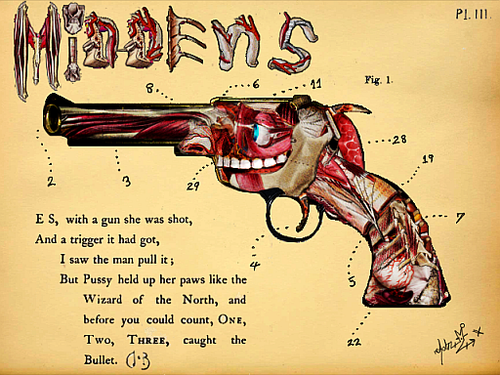
  1. Pistol: Someone has crudely engraved a mouth on the grip. It's a common superstition, said to increase your aim. It recalls the legendary "Speaking Gun", which told Janus everything about his enemies, making sure he could never lose.
  2. Theological analysisThe "Executioner that Spoke" was actually a metaphor for the terrible indiscretions of Pope Johan Riechart III. The original text describes a bloody tube that destroys the sinner's enemies, but eventually turns on him by "Speaking his name", and thus "Scattering him to every corner of the earth." This represents the Pope's trio of murder-men, who spoke his name in court and thus sentenced him to torture and death. 
  3. Local folktale: Jakob was an envious man, who prayed and received a miraculous pistol. Jakob turns the pistol on a picture of his brother: it speaks his brother's name, and Jakob inherits his brother's wealth. He points it at a portrait of the king: it speaks the king's name, and Jakob inherits the crown. Finally, he runs to the cathedral and points it at the fresco above - but this time, the gun speaks Jakob's name, and he is turned into a monster.
  4. Children's book (1sp):
  5. Journal of a Satanist (Worth 1,000g to the church, who will destroy it and/or anyone who's read it. Written in an ancient language)They cut out god's tongue. That's why he doesn't speak anymore. I saw it, on the lowest level: A vast hollow tube. There's no wind down there, but something moves through it. 
  6. Superstition: If you speak someone's true name backwards, they are unmade completely. They do not exist, they will not exist, they have never existed.
  7. Religious text: But Joseph descended from the mountain; and in his left hand was a great light. And it called Mahanaim, and Edom, and Careb; Nahbi; Kibzaim, Keziz, and Samuel; and all it called fell down around him.
  8. Mural in ruins of civilization (5,000g if it can somehow be retrieved for a gallery). Panel 1: An old warrior. Panel 2: He enters a tent, where a lump of flesh sits on an altar. Panel 3: He points the lump to his head (right handed). Panel 4: His body is stripped from him. Panel 5: His soul wreaks havoc on the enemy.
  9. Asylum patient records: ...strange wet noises coming from his hand. Heinrich claims the "Gun" suckles on his palm. He takes this as more evidence that the thing loves him. No matter how many times I throw the thing away, he somehow manages to get it back in his hands again.
  10. Asylum records:..has been completely mismanaged. Several patients have gone years without being assigned a psychiatrist. Heinrich still claims he had a "Dr. Reed", which the gun devoured. Unable to find anyone of that name in our records - possibly a childhood friend of his?
  11. Black box d10 x 50g: Inscribed with symbols of an ancient cult. Inside is a tiny lump of meat on a velvet cushion, clearly once part of something larger. They say that cult used to have a stronghold on a mountain to the east... 
  12. Statue: Man holding up his left palm, which has a hole straight through it. Often placed at entrances and windows, to guard against spirits. The hole is designed to make an eerie whistling when the wind blows through it.


*Ice-Pick lodge loves using this trick. In The Void, you learn from 10 sisters and 10 brothers, who all explain the rules from their own points of view. The first sister, for example, tells you how to progress in the game, then warns you not to do it under any circumstances. Don't go out into the game, don't try to win. If you stay here in the tutorial, time will never go forward, and nothing bad will ever happen. We can live here forever.

When you leave her island, something terrible happens to her.
Tyrant, one of the Brothers

Ability scores

So here's the score:


Everybody wants Strength, Dexterity, and Constitution, because everyone wants to hit dudes, avoid being hit by dudes, and stay alive.

Wizards want Intelligence and Clerics want Wisdom, because they're the only ones who can use those for magic.

No-one wants Charisma. Not that you'd turn down a good CHA score, but it's not core to being useful to any class.

So: Everybody gets the exact same benefits from those three physical stats, but the two mental stats have special effects specifically set aside for Clerics and Wizards. Training doesn't let fighter use his +3 Strength for any class-specific purpose, but only a Wizard's knowledge unlocks the potential hidden in the INT score. That's shitty for physical classes, and makes INT and WIS almost useless to everybody but Wizards and Clerics.

I think the best thing to do is to have six core classes. Each does something special with each ability score. We already have two flavours of spell caster - one for Int, one for Wis. It seems sensible to extend that and make a Charisma-flavoured Thief, and a Con-flavoured fighter. The Charisma thief would be some kind of Fool or Alice. Fighters could be split into offense and defense, barbarian and knight.

All the scores should have a massive effect on every character, regardless of class. This makes every character more distinct. If you can say "Hey, my fighter's pretty smart" - and that has a meaningful impact on the way you fight dudes - then you've got more options and a more interesting character. You already get bonuses like better saves and more languages, but I don't think that's enough - ideally every score should be as important as STR and CON are for non-fighters, and those are hard scores to top.

The spirit charms are my first step to doing that - everybody can use a Wis check to get help from the spirits, so everybody has a good use for Wisdom. I'm giving Charisma some heft with this Caste system. Charisma gives you your rank- fuck with anyone below you, fear anyone above you. For Intelligence, I'm thinking you can make an int check (d20 + int mod VS a difficulty) to know monster HP, AC, abilities, attacks, secret weak spots, etc - all but the most secret of knowledge.

I might work through this and post more later - rules for giving fighters and thieves something special to do with Strength, Constitution, Dexterity and Charisma, and those two extra classes.

By the way


Here's some cards you can use for Card Wars.


Rock paper Scissors brawls


You can challenge anyone to an unarmed brawl. If they accept, don't take your turn; instead, wait until it's their turn, and play rock-paper-scissors against them to determine the winner.

ROCK: Punch. If the punch damage reduces them to 0 HP, they're knocked unconscious. Some weapons like brass knuckles can be used to increase your punch damage, but I'd say the base is d3. In a tie, the one with the highest strength wins.

PAPER: Dodge. You must move, and you can perform one non-combat action (Picking up something, pulling a lever, pushing over a bookshelf, etc. It can still hurt a dude, as long as you don't touch them directly.) In a tie, the one with the highest dexterity wins.

SCISSORS: Grab. Only lasts for the turn. You can throw them as far as your Strength modifier in meters, or disarm them of a weapon or item. When disarmed, the weapon will clatter to the ground a few squares away (They can use a dodge action to pick it back up). In a tie, the one with the highest constitution wins.

Any attack against someone who's in the middle of a brawl will hit the other brawler if it misses. This means it's mostly in your interests to leave this Mano-e-mano. If the enemy does not accept your challenge (Or if they're surprised), then you keep in turn order: You punch, dodge or grab for free, and they take their turn as normal when it rolls around.

Implications:

Yomi - "Reading the mind of your opponent" - makes this into more of a mind-game than a dice roll. You need to judge whether your opponent wants to punch, dodge or grab, then do the opposite. Now, tie breakers are very powerful: They let you win two out of three match-ups. But wait; if the DM knows how strong you are at grabbing, then he'll use a punch - or does he know that you know that he knows?

Grabbing and disarming an opponent influences this yomi, by making the opponent predictable; You know they'll probably want to dodge, so that they can pick up their weapon. 

We had a fight near a cliff edge, and one of my players wanted to throw a guy off. However, when the Brawl turn came around, he'd figured out that I knew he wanted to throw a guy off, so he went for a punch. But I knew that he was going to realize that, so I craftily went for a dodge. What I didn't realize is that the bad guy was packed in. The only place he could dodge was straight off the cliff and down to his death.

That tension of suspending your turn until the enemy's turn rolls around is fantastic. While the others take their actions, you're looking across at the DM and pondering your next move.

Edit:

Colossus-Climbing rules


If you grab a large creature, you can climb up them. You can do this once for something giant-sized, twice or more if it's bigger. This gives you an extra dice of damage: d4 after one climb, d6, d8 and so on if you climb higher. If either you or the colossus dodges, you'll fall off.

So you see, you want to attack, but you'll need to grab on if the colossus tries to shake you off with a dodge.

Fighting Swarms


If you do more damage than a monster's remaining HP, you can overflow the remaining damage to any other monsters who are close by.

This means you can easily crush 4 1HP fairies in a single swipe. The same applies to PC's: A dragon could wipe out your entire level 1 party with a bite. You can avoid this effect by spreading out.

Jack McNamee's 10-Second System


I've been playing X-Com lately. You control 14 dudes as they die, panic, succumb to alien mind control and turn into zombies. At the end of a mission you level up the survivors and buy another crateload of rookies. Death is constant and hard to anticipate, so a lot of the strategy revolves around sending in the cannon-fodder rookies to protect the guys you care about.

It's interesting, because as far as I can tell early D&D worked the same way. A lot of the traps in the DMG seem totally ridiculous for the current fashion of ~4 PC's. Save or Die effects, level drain, diseases - Matt's poor PC died to Rotgrubs in a single turn, before he had any way to tell what was happening or how to stop it. These things only really make sense if you have 10+ PC's, with some hirelings for good measure.

(You'll have to excuse me if I'm reiterating stuff everybody knows. D&D is still a strange new land to me.)

Creating 10 normal characters and trying to keep track of the results would take hours and drive me insane. So, here's an experiment: Jack McNamee's 10 Second System (Matt helped).

--------
Roll one d6 for each starting ability score, then roll an occupation and starting equipment (You can use this DCC character generator for those). Your starting character is finished.

Dret thiefton turned out to be only average at thief skills. His parents will be shattered.

Here's what the scores mean.

Strength: The weapons you can use. Whenever the PC's find a weapon, rate it out of ten; you need that much strength to wield it. Bonuses to damage and to-hit are inherent in the weapons you find, rather than something you earn as you level up. Roll under it on a d10 for strength checks.

Constitution: The hit dice you get whenever you level up. Roll under it for fort saves.

Dexterity: Skill checks and reflex saves. Whenever a PC needs to make a skill check, rate the task: 5 for trivial tasks, 10 for normal tasks, 15 for hard and 20 for impossible. Your dexterity shows which dice you roll for it; d6 to d20+10. At 1 dex, you cannot perform any kind of skill checks.

You can learn skills from expert thieves. If you haven't been trained in a skill, use 1 less dex when rolling for it. If Dret Thiefton has 3 dex, he'll roll a d6 instead of a d10 for any skill he hasn't trained in.

You can use any skill list you want, or just use the DCC list: Backstab, Sneak, Hide, Pickpocket, Climb, Locks, Find traps, Disable traps, Forge, Disguise, Read Languages, Poison, Cast spell from scroll.

Intelligence: Which spells you can learn, and will saves. Whenever the PC's find a spell, rate it out of ten; you need that much intelligence to cast it.

Intelligence applies to both Wizard Spells and Cleric Spells. You go to a wizard to learn spells from the Wizard list, and a Cleric to learn spells from the Cleric list. They hate each other, and they'll want you to become one of them before they'll teach you the better spells. You could obviously cheat them to learn both.

Wisdom: The number of spells you can hold in your brain at once. Vancian rules. Roll under for Perception checks.

Charisma: Which Hirelings you can get. Hirelings can be level 1 to 10; that's how much charisma you need to hire them. At 5 Cha, you can hire level 5 guys. High level hirelings will also have better equipment, and may know some skills or spells. Roll under it for a morale check to stop your hirelings panicking or stabbing you in the back.

Every time you level up, you get one hit dice of HP and one extra point of ability score to allocate wherever you want. Max level is 10.

The system assumes every player will have 2-4 PC's. You get 2-4 new PC's when the last PC from your old batch dies - until then you have to rely on hirelings to restock.
-------

So, most of the traditional leveling up choices occur in the world. You have to find spells and skills, instead of being abstractly given those things when you level up. This is partially inspired by the old D&D ideas to that effect, and partially inspired by the way Dark Souls and X-Com work. Your PC is defined by the things they have, and their stats define the things they can have.

It's fast as lightning and completely classless. It's not going to be for everyone. I'll try running it on Monday, I'm excited to see if it works. Tell me what you think in the comments..

Feudalism


Here's a way to incorporate the Caste System into your game, ruthlessly stolen from the brilliant Small but Vicious Dog and tweaked to add some heft to Charisma. There are 8 ranks in the Caste System:

 
8. Queens, Kings, and Heirs. Anyone with a right to the throne.

7. Lords, Barons and Titled Gentry; the highest rank you can possibly be without being born into royalty. Own all the land.
6. Nobles, Aristocrats and Knights. Oversee the land for the lords.
5. Shopkeepers, wealthy merchants - anyone rich who had to work for their money.
4. Freemen. Commoners who can choose where they go.
3. Villeins: Peasants, commoners, laborers. The vast majority, working the land as slaves to a Lord. They are forbidden from leaving their lord's land.
2.  Lepers, beggars and guttersnipes. Loathed, but tolerated. Will not be allowed in most places.
1. Witches, devil-spawn, and mutants. Will be killed or chased from any major city or town if seen.


A PC is normally Rank 4, a Freemen; low class peasants who can still choose to go where they like.
Your Charisma modifier effects your rank. +3 elevates you to a Rank 7 Lord, -3 makes you an ostracized freak.  You also get + or - one dice worth of starting money per point of charisma mod. You gain rank naturally every three levels or so, but you can also move up and down ranks through your actions.

Pulling rank


The social demands of caste-system etiquette are subtle and complex. You can fuck with anyone below you.

One rank below you: You can ignore anything they say. They must give a good reason for disobeying any orders, or you're allowed to inflict any kind of non-painful punishment on them.
Two ranks below you: They must follow your orders. You can inflict any kind of non-lethal punishment on them for disobeying..
Three ranks or more below you: You can kill them without any legal ramifications or comment. They must follow any order, to death and beyond.

The same applies in reverse; don't fuck with anyone above you, or they could start throwing out punishments. The system is only enforced socially, obviously. Deep in the wilderness, outside of society, it's easy for the underlings to realize that you're just a weak man in a funny hat.

Unless you go a step further and use;

Divine Right


You aren't just a lord because your dad was a lord; you're a lord because God put you there. The medieval point of view is literally true in all aspects: The caste system is enforced by the universe, and nobles actually are better than peasants in every way.

When fighting someone of a different rank, find the difference between your ranks. Whoever's the highest rank gets +the difference to every relevant roll: To-hit, saves, damage, grapple checks, everything. The lowest rank gets -the difference to every roll.

So, if Graunch the Leper tried to take a bite out of King George, Graunch would be rolling at -6 to everything, while the King would get +6 to everything. This doesn't apply to anyone who doesn't care about the caste system.

A statement of intent: I'm not using these rules to stop my PC's fucking with high-level NPC's. I assume they'll still be constantly toppling governments like always. What I'm going for here is a way to give your Charisma score some serious social weight without forcing people to make Cha checks instead of roleplaying. 

With these rules, a high Cha makes you a force to be reckoned with in the city, and a low Cha could make you flee from any nobles you see. It even has hireling implications: You can order anyone three ranks below you to come on an adventure, whether they like it or not. Lepers or Peasants will be terrible at fighting, obviously: You'll still need to shell out coin for the good fighters. But being able to order up a mob on demand is pretty neat. 

Great Level-drain alternatives from Dark Souls

I like the idea of level drain. It's like taking bites out of your soul. It makes any enemy, no matter how goofy, into a terrifying thing that you never, ever want to fight, or go near, or look at. It sends the message: "There is nothing you have that I can't take."

But jeeze, that book-keeping. There's way too much fiddling around to consider going up or down levels in the middle of a fight.

Dark Souls - the best D&D videogame - has some great alternatives.

Curse


Your max HP is halved. How simple is that? Keep track of what your max HP was, and keep increasing that as normal as you level up, but you can never have more than half of that. Season to taste. The sadist DM may wish to allow players to be double or triple cursed to 1/4th or 1/8th of HP. 

Curses are generally inflicted by Basilisks, which obviously look like this:


Also known as "Curse Frogs," these guys puff up their throats and spew cursed smoke everywhere. 1, 2, or 3 saves before you are cursed, according to taste. Anyone who is cursed will immediately solidify as a jagged stone statue, returning the next morning as a shivering wreck. These statues will be littered around any place where Curse monsters live.

The Accursed are the only ones who can harm ghosts. In the middle of ghost towns, you can find men who will take away curses. Curses can never be lifted - only transferred onto someone else.

Infest


Your head sprouts egg-sacks. The creature inside will devour half the XP you earn from now on. Every time you level up, it will too, growing and hatching into... well, you're the DM. Use my worm table for inspiration if you want.

egghead.jpg

This malady is generally inflicted by the egg-burdened servants of Chaos Witch Quelaag.

Img0064.jpg

They'll grab your legs, and their maggots will infest your head. If you receive their sacred burden their leader will welcome you as one of their own, and he has much sorcery to teach. They may even have a cure, though they consider the idea the vilest heresy.

Hairsplitting Weapon table

Every time my players go to buy weapons, I drag out the equipment list and they spend half an hour deciding which of the 10 weapons and armors that exist in the world they want to use. I've always wanted to recreate the fantastic variety of weapons in games like Dark Souls, but make that equipment list any longer and we'd be looking through it for hours.

Zak has it figured out, obviously. Random tables fix everything. 

Grave of Swords


Anyone selling weapons has about 1d4 of the weapons below for sale. Roll a d10 for the middle of nowhere, d20 for a normal town, and d50 for the big city. The number you rolled is also how much it costs.

Some weapon rules: For ranged weapons, Short range is the size of a dungeon room, medium range is about the size of a football field, long range is anything you can see (At DM's digression). Some weapons on this list have stat requirements, like "Requires +2 str". Anyone who doesn't have that stat can still use the weapon, but they'll critically fail on a 5 or less.

  1. Dung Pie. Anyone touching it must save vs. poison or lose d4 hp per round for d6 rounds
  2. Fine Cipachian Throwing Rock. D3. -2 to hit. Short range. You won't get a price like this anywhere else!
  3. Sword hilt. D4, -2 to hit. 
  4. Cestus: d3. Fist wrapping. -2 vs heavy armour.
  5. Sling, d4, short range.
  6. Garrote, d6. Can only be used on a surprise attack.Grapples victim, deals d6 damage per round.
  7. Staff, d4. Two-handed.
  8. Spear, d6.
  9. Dagger, d4/d10 on a backstab. 
  10. Whip, d4. Dex check to grapple things ten feet away: Enemies, items, etc. Not strong enough to hold much weight. 
  11. Blowgun, d4, short range. The darts can be loaded with all sorts of poisons. 
  12. Shortsword, d6. 
  13. Hand axe. D6, critical damage against all wood/plants. 
  14. Throwing daggers. D4/d10, short range, D8 per pack. 
  15. Net. Two-handed. On a successful hit, victim makes a strength check or is captured.
  16. Light crossbow, d6. Short range.
  17. Shortbow. D6 damage. Two-handed. Medium range.
  18. Longsword. D8, two-handed.
  19. Heavy crossbow, d8. Short range.
  20. Black firebombs. D6, d6 fire damage ongoing. d4 per pack.
  21. Halberd. D8, two-handed, long weapon can hit enemies from a small distance away.
  22. Claw gauntlets. Wolverine claws. D6, can use while taking two move actions.
  23. Carim Parrying dagger, d4. Use in your off-hand while wielding another weapon. Against sword-wielding enemies, you can ready an action to Parry: Dex check to sweep aside their attack and do backstab damage.
  24. God Hand. Cestus marked with banishment symbols. D6, knocks enemies back a large distance, can be held while wielding other weapons.
  25. Spiked shield. D6 damage, +1 AC. 
  26. Pike. D8, two-handed, can hit anyone at short bow range, but can't hit anyone that's right up in your grill.
  27. Longbow. D8 damage. Two-handed. Long range. Can't use and move.
  28. Ninja stars. D4/d10, medium range, d8 per pack.
  29. Boomerang. D6, medium range, returns after use.
  30. Consecrated mace. D6/d10 vs unholy creatures. Stops the dead from rising again.
  31. Server. D4/ d10, restores HP per damage inflicted. Curved dagger used in a mysterious ancient rite.
  32. Hook dagger. D4/d10, +5 to climb checks.
  33. Lance, D8. Two-handed. D12 when on horseback. 
  34. Pole-vault polearm. D8, two-handed, can be used to jump large distances.
  35. Ash tree staff. D6, +1 int modifier while wielding.
  36. Spiked whip. D4. Dex check to grapple things ten feet away, anything grappled takes d6 damage per turn.
  37. Dragon's tooth. You've picked up a dragons tooth by the pointy end and decided to hit people with it. D10, two-handed, knocks enemies prone, fall prone yourself if the attack misses.
  38. Jagged Ghost dagger: d4/d10. Stolen from the dead, can be used against specters. 
  39. Laughing Katana: d10, every hit deals critical damage, damage yourself normally on a miss. 
  40. Halleluiah plunging dagger: d4/d10, critical damage when attacking from above.
  41. Lloyd's Talisman: Symbol of Allfather Lloyd, prevents all healing on anyone it's thrown at.
  42. Horizon Longbow. D4/d12 at long range. Long range, takes a turn to notch arrow before attack.
  43. Snatcher's Trident. D10, two handed. Can use a turn to enact the complicated Snatcher War Dance with it, which boosts nearby allies damage dice up a notch (d4 to d6, etc) for d8 rounds.
  44. Great Battleaxe, d12. two-handed. Requires +2 str. Must always go last in initiative. 
  45. Pardoner's stealth crossbow, d6. Short range. Hooked onto your arm, can be concealed by long sleeves. A button on the side pops it out for use.
  46. Chimera tail whip: d4, save vs. poison. Giant scorpion tail of the Chimera coiled up as a whip.
  47. Carim Dual-wield crossbows, d6, short range. Can attack with both crossbows in one round, as long as you make no move action. Requires +2 dex.
  48. Kelian Knockout gloves. No damage, knocks unarmoured opponents unconcious. 
  49. Psychic garrot. On a successful surprise attack, grapples and steals one spell/memory per turn. Requires +2 int.
  50. Cursed Greatsword of Artorias. D20 damage, two-handed, curses all who wield it (halves HP).