MEGAMALL23


I am joining the dungeon23 craze. If you haven't heard of it, Dungeon23 means writing 1 room of a dungeon each day, every day in 2023. My project will be an dying cyclopean Megamall in the same modern horror setting as these monsters

This vast decaying megamall has lain outside your home town for as long as you can remember. Your parents remember the days when they used to shop there. You grew up with stories of the wondrous things they bought. The light and sound and colour. The air inside smelled of popcorn and sweet syrup and caramel. It was a magical place. A dream.

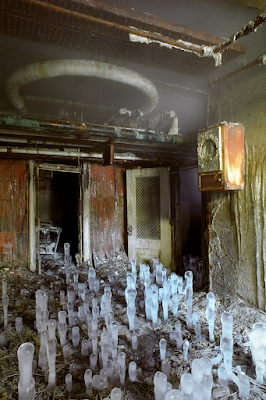
Things have changed. The lights flicker and fade. Huge sections of the mall lie empty and dark. Sometimes you think you can glimpse unknown constellations or planets inside the glass domes. Twisted shapes scuttle within. But still, people come. They flood into the mall from all across the country. They can't help themselves. They dream of it. Perhaps somewhere inside, they can finally buy the answer to all their problems.

ENTITY 05: HIGH REALITY INDIVIDUAL


Scientists estimate that most humans are between 20% and 60% real. with some outliers that achieve up to 70% materiality. Wei is different. He breaks every chart and destroys every reality sensor in a 20 mile radius. He is the only true human, and the rest of us are just figments of his imagination. 

Random boss idea: Destroy the Action Economy.


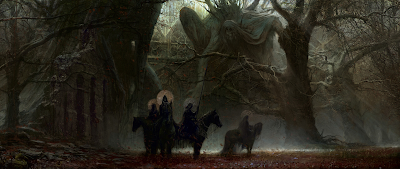
All art in this post by Artem Demura.

We've all heard the problems with big, solo boss monsters in D&D. They can easily become boring, grindy, and non-threatening. The poor things end up getting killed before they get a chance to do anything cool. The PC's have access to a huge array of bullshit that can easy grapple, restrain, stun, or put your hapless boss to sleep. The action economy is fundamentally against a solo boss, which it makes it really hard to make a fun, challenging solo boss in the "Combat as Sport" style of play.

Here is a random, simple idea for helping with these issues: Scrap the action economy. Just throw it in the trash. Instead, do this.

After each player's turn, the boss takes a turn. 


Each time the boss takes a turn, it can move and take 1 action. Actions can just be typical examples like this.

  • Claw. +14 to hit, reach 5 ft., one target. Hit: 15 (2d6 + 8) slashing damage.

So after a player takes their turn, the boss can make a claw attack. But actions can also be linked together in action chains, like this.

  • Careful shot. The Archer aims at a target and slowly draws back his bow.
    • The Archer fires. +12 to hit, 2d10 damage. 

After Player A's turn, the boss does the first action (drawing the bow). Then after player B's turn, it completes the action chain by doing the second action (firing an arrow). 

Here's another example of an action chain.

  • Blood Moon. The Wolf rears back and howls. The sound makes your head pulse with wild pain.
    • The moon turns blood red. The area 10 feet around the wolf begins to squirm with black liquid.
    • Burning blood rains from the sky. Everyone within 10 feet of the wolf takes 3d10 damage. 

or this.

  • Grapple. The plant grabs the nearest player. Make a DC 20 strength save - if they fail, they are grappled and take d6 damage.
    • The plant pulls the target into its maw. They are trapped inside and take d8 damage a round until they can free themselves with a successful DC 15 Strength check. 

By doing this, you can foreshadow attacks like in a videogame. It gives the PC's a short moment to see what's about to happen and get out of danger. If the monster misses the first attack in the chain, the rest of the chain doesn't go off.

In the normal action economy, foreshadowing like this is tough to do. If your enemy spends a turn powering up for a big attack, it's just wasted an entire round! It probably won't even survive to unleash that attack. With this system, it's very easy and simple to foreshadow what the enemy is about to do, because each action is split up so much more. 

This is great because it lets the PC's experience those heroic moments. "Jane, you can see the dragon is bearing down on the wizard, about to swallow him whole - what do you want to do?" Jane has a turn to try to save the wizard from danger before he's devoured.

You could simply follow the normal initiative order with this system, or even let the players decide what order they want to go in.

Reactions


Instead of taking an action, the boss can take a reaction like this. 

 After someone shoots a projectile at the Archer: He snatches it out of the air, cancelling the damage, and quickly fires it back with his bow. +5 to hit, d6 damage.

 <- This symbol means it's a reaction. The GM can choose to trigger it when a specific condition is met. If the boss makes a reaction, they've used up their action for that turn. 

Weak Points


You can also use action chains to easily create classic video-gamey scenarios where the enemy is vulnerable after their attack. Here's some examples:

  • Giant Swing. The warrior moves and swings the gigantic axe at the closest PC. +10 to hit, 2d8 damage. The axe is buried in the wall or floor. 
    • The Warrior struggles, then pulls their axe free with a crunch and holds it high above their head in triumph.

  • Charge. The Boar aims at a spot with the most PC's clustered together in a group. It prepares to charge.
    • The Boar charges in a straight line until it hits a wall or solid object, dealing 2d12 damage to everyone hit. Whatever object or wall it hit will be destroyed.
    • The Boar staggers around, dazed. All attacks have advantage against it. 
    • The Boar shakes itself and regains its composure.

  • Death ray. The machine opens up its chest and fires a death ray from its heart. 3d8 damage in a 60ft cone, 19 Dex save for half damage.
    • The machine overheats! Its beating heart is exposed! Any attack that targets the heart  double damage this turn.
    • The machine closes up the iron protecting the heart and stops being vulnerable

Again, in a normal action economy you'd be making the boss vulnerable for an entire round - way too much. With this system you can open it up for only 1 or 2 turns, so only a couple of players get the chance to seize the opportunity and try to make their attacks count. 

Desperate actions


<- An action with this symbol is a desperate action. It can only be performed when the boss is at half health or lower. For example:

  • ✸ Desperate Flame. The dragon lets out a shriek of terrible rage. Ash and smoke billows around it.
    • A cloud of ash surges from the dragon. The area within 80 feet is covered in smoke, making it difficult to see. The dragon inhales. The heat intensifies.
    • All terrain within 80 feet is ignited like tinder. Each creature on the ground must take d6 fire damage on each of their turns for the next minute.

This is a simple way to do "Phases". Desperate actions should be something that seriously change up the battlefield and the situation.


The Horde

You can use this same technique to run a huge horde of enemies. Let's say you have a wave of countless undead converging on the PC's as they try to hold out. Don't run individual turns for every enemy - that would take forever. Just give them a group health pool, and have them take an action after each PC action. For example: 

  • A zombie latches onto you and tries to bite you. +5, d8 damage, save or become infected.
  • Rotting hands grasp at you from all angles. DC 18 STR save or be grappled.
    • The hoard drags you away from the rest of the party and into the mass of undead. 2d8 damage each round until you make a DC 18 STR save or another party member saves you.

When describing attacks, you can narrate the party cleaving through 3 zombies in a single blow. But mechanically you just keep track of the group health pool for the horde, and continue to take an action after each PC. When the health runs out, the horde falls apart or their morale breaks. The remaining survivors flee or are easily dispatched. This is an easy way to running any combat against a large group (an enemy army, goblins, orcs, etc). 

Converting 5e bosses to this system.


Movement: Divide the movement rate by 4 (roughly - round up if needed). The boss can move that far each time it takes a turn. So instead of moving 40 feet a round, the monster could move 10 feet after each player's turn. 

This works out to the same amount of movement with an average party of 4 players, but splitting it up might make the boss feel a lot more dynamic and mobile. It constantly moves around the battlefield and changes the situation instead of just sitting there for a full round while the PC's pile on.

Attacks: 
  • Normal Attacks: You'll want to reduce the damage. If the boss normally makes 1 attack per round, I would roughly divide the damage by 4 to make it work for this system. 
  • Multi-Attacks:  If the boss has a multi-attack (like Claw, Claw, Bite), then each component of that multi attack can just be a single action. 
  • Big Attacks: For a big attack like a breath weapon, an AOE effect, put it into an action chain. Try 1 or both of following:
    • Add 1-2 actions beforehand to foreshadow the attack.
    • Add 1-2 actions where the enemy is vulnerable afterwards. 
  • Specific Attacks: For something specific or niche, consider making it a reaction to a specific trigger. When the dragon is attacked from behind, it uses its tail attack. This is cool because it allows the PC's to learn the boss's behaviour (better stay away from that tail). 
  • Status effects: For big status like paralyzation or charm, put it in an action chain of 2-3 steps. The effect gets worse each step until it finally accomplishes the full effect. 


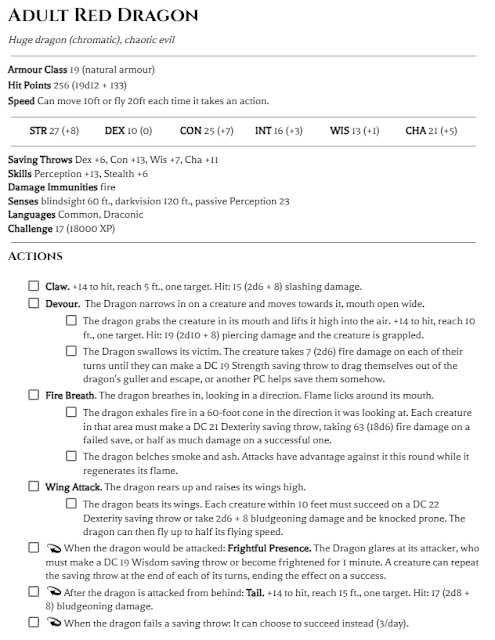
Example: Adult Red Dragon.

Here is an example using this technique to revise the Adult Red Dragon from 5e. Click this image for the google drive link. 


So, what are the benefits of this idea?


The boss always gets to do something cool.


Using the traditional action economy means that a single opponent doesn't get to do very much. A combat might only last 3 rounds, which means the boss only really gets 3 chances to actually do anything. That's not much! It doesn't feel like an exciting, dynamic opponent. More like an opponent that's holding on and hoping it survives until its one big turn.  

This system means that the boss is CONSTANTLY doing cool stuff, every turn. Even if you have 5 PC's and they manage to kill the boss in the first round - that means the boss got to do 5 cool things. So the boss always gets a chance to show off and have some interesting things happen. 

More dynamic situations.


Instead of the boss sitting there while you wail on it for 5 player actions, the situation changes every single turn. The boss is constantly moving and doing something, so there is always something new to consider. I think the simple dynamic of "I Go - You Go" would make combat flow a lot better. 

Less insta-kill attacks.


Because a solo opponent only gets 1 turn in the round, they need to really deal a serious amount of damage if they want to actually be a threat. That can make encounters very swingy. You're 100% fine, then suddenly you get hit by Claw / Claw / Bite all at once out of nowhere and wiped out instantly. By splitting up the attacks throughout the turns, each individual attack is more reasonable and gives the players more time to react.

But because of the foreshadowing of action chains, you can feel free to really rip into PC's with big, devastating effects - because you've warned them that something big is coming up and given them a chance to avoid it. Effects like charm, paralyzation or being turned to stone would all be fine to use with a bit of foreshadowing. 

It's scalable.


This technique automatically scales to the number of players you have. 1 player fighting the boss would be just as viable as 8 players fighting it. 

You might just need to change the HP a bit. I would consider dividing the HP by 4, and then giving it that much per player. 

This is all just a theory at this stage, so if anyone does end up trying it out I'd love to hear the results. Let me know in the comments below. 

The Thief, the Witch, the Toad, and the Mushroom.

The chrysalis weakens. The video game I've been working on nears completion.


I'm planning to release it on Steam and Itch.io in 2023. You can see more info on the website here or wishlist the game on steam using the link below.

Community Service Carousing for Mausritter


The Carousing Table is an OSR classic. OSR games often reward XP for treasure, which can leave your players with tons of loot and not much to spend it on. Carousing solves that issue by adding a money sink - your players can always get rid of excess cash for a benefit. Plus it naturally generates adventure hooks at the same time!

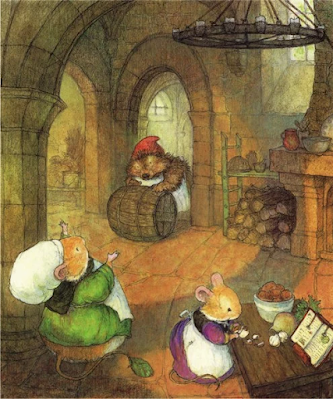
Mausritter offers a wholesome twist on this idea with community improvements. Your mouse can earn additional XP by spending their treasure selflessly on improvements for the whole community. For every 10 pips spent this way, your mouse earns 1 XP.

This is lovely, but the rules don't offer any specific ideas on what you could spend money on to improve your community. So, here is a community improvement table! 

If someone wants to invest their hard-won pips back into the community, roll on this table 3 times to give them a few options for what to invest in, and let the players choose which ones they want. Each improvement comes with a potential benefit you could reward the players with, and an adventure hook to inspire you. 

Roll d66 (d6 x10 + d6):


Community ImprovementBenefitAdventure hook

11        
Dig a new well for the town. May make a wish once per session. Spirits may help you with your wish (giving you advantage on one critical roll to achieve it).You unearth an ancient cave with a lindworm (a blind, pale snake which breathes poisonous smoke). It speaks your tongue and knows many secrets.
12Build a bridge over a nearby river, or tunnel through difficult terrain.Easier travel (1 watch to cross hex instead of 2).Toad moves in under bridge and begins demanding toll.
13Help grow crops or create a community garden.1d3 free rations each time you visit town.Pumpkin harvest spirits haunt the fields and cause low-level mischief. If appeased, they guarantee a good harvest.
14Rebuild a church of the mother. Priest can provide 1d3 flasks of holy water each time you visitLearn of an ancient artefact of the mother, the holy thimble, in an adventure site nearby.
15Create a boat or vehicle for the community that can travel between towns to ferry goods.Store stocks a better selection of goods. Torches, lanterns and other utility items may have +1 use.Bandits plan an ambush to hijack the vehicle. Traders ask for PC protection.
16Fund a local carnival or harvest festival. Can win human artefacts as prizes at carnival. Fierce competition for the best costume and display. Some mice may plan sabotage to win the prize: The Golden Pumpkin. 
21Dig burrows for free community housing.Free rooms when you're in town.Burrowing accidentally uncovers the ruin of an labyrinthine mouse burrow from centuries past, haunted by old ghosts.
22Build a local theatre. Free masks, disguises and other theatre tools.Mysterious figure haunts the theatre, causing accidents and demanding that a certain mouse be made the star of the show.
23Improve accessibility of the village (ramps, better facilities for older mice, etc). Grateful local mice help you with your projects (building things, etc).Mysterious rat stranger with cane and eyepatch thanks PC's and hints at pirate treasure.
24Paint and repair local homes or businesses. Install secret passages that will help you and the town in case of attack.Discover a nest of bats hiding in an old home, fleeing enemies in another faction.
25Build a fire station to help handle bushfires and other disasters. Safety during rough weather events. Rowdy fire-fighting mice ask the PC's to assist them with a disaster (fire, flood, landslide, etc)
26Fund medical facilities. Full rests in town take half as long to heal you. May be able to heal strange, normally unhealable conditions.Doctor asks for assistance with mysterious experiments in dream serum. Mice enter hallucinogenic trance that leads them to the dream world.
31Build an arena where mice can compete in games of strength (woodchopping, rope climbing, duels, etc). +1 STR to all hirelings. Brawny mouse attempts to impress PC's by beating them in a contest.
32Fund your local library. Can research the answers to 1d3 questions each time you visit town. Librarian discovers occult tomes with dark knowledge and asks the PC's to seal them away safely. 
33Build watchtowers. Watch-mice will see any threats coming and warn the town with a gong. Watch-mice notice a travelling caravan of circus-folk in the distance that seems to have gotten lost and waylaid by bandits.
34Fund local arts and crafts supply.Free items: Paintbrushes, string, modelling clay, human pencils.Inspired artist creates painting of mythical unicorn-frog creature - claims to have seen it nearby.
35Create a home for local stray beetles. Free beetle hireling with +1 inventory slot.PC's hear rumour of a magical beetle nearby with mysterious powers (eg, can see ghosts). No mouse has ever tamed it.
36Protect, reclaim and rejuvenate local wilderness. Gain 1d6 rations when foraging instead of 1d3.Fae spirits take a liking to you, may kidnap you into fae realm. 
41Repair and fix clothes for mice of the village. Mysterious local tailor may craft costumes of unknown make and potentially magical abilities for the party.Must steal a piece of human clothing to complete the project (Sock, glove, stocking, etc).
42Create a field for local sports. Mouseball, that kind of thing.+1 Dex to all hirelings.PC's may gamble on games. Some mice try to rig the game for a big payout. 
43Buy better musical instruments for local bards. Free Bard hireling (Gives group +1 to reaction rolls). Bards go on tour throughout local settlements and request PC protection for their travels.
44Fund your local school.+1 WIL to all hirelings.Teachers ask PC's to recover lost texts, hidden in a frog library. 
45Build a tower for local hedge witches / wizards.PC may be taken on as an apprentice and gain a spell.Mouse Warlock requests a piece of a fallen star to complete the project. Meteorite shard can be found in nearby adventure location.
46Build local beehives.Earn d3 fresh honey rations each time you're in town.Queen Bee is kidnapped by a spider queen.
51Create more mouse holes and tunnels in human territory.Easier to move unseen through human territory.Hamster escapes and settles in town, has wild tales of treasure in human child's room.
52Fund local leatherworking.Can upgrade armour. Gains +1 DEF against specific damage source (Eg fire).Armourer tells you the location of a magical shield or piece of armour.
53Fund local blacksmiths.Can upgrade weapons. Deals +1 damage against specific target (eg birds). Blacksmith tells you the location of a magical weapon.
54Fund local brewery.Gain 1d3 jugs of ale when you're in town (gives advantage on WIL saves and disadvantage on DEX saves for d4 turns).While drunk, you overhear some noblemice discussing a terrible scheme against a good faction.
55Fund a local bat cult.Can hire 1 bat mount as a hireling for 40p per night.Must seek out a great sacrifice to summon the Night Queen.
56Fund fungus farm.Gain 1d3 mushrooms each time you're in town. Some heal d6 STR when eaten, others deal d6 STR damage when eaten. Fungus farmers tell you of a mysterious Truffle Lord, a fungus-creature who rules the mushroom realm under the farm. 
61Fund local cartographer's guildGM provides more detailed maps and information about hazards in the region.Cartographer gets lost mapping unknown place and must be rescued. Has a detailed map of a nearby adventure site.
62Fund community newspaper.GM provides more information about faction goals and actions each session.Newsmice ask you to help with investigative reporting of local murder / conspiracy.
63Fund activism against corrupt noblemice.May be able to topple local noblemouse and take over their manor.Resistance cell asks you to help them free prisoners from noble's dungeon.
64Create shrines to appease local spirits.Spirits in the area will watch over you and protect the town in subtle ways.Offended trickster Bogart causes havoc (curdles milk, spoils eggs, etc). Must be defeated or appeased before project can be completed.
65Exorcise ghosts from local graveyard.May speak to the spirit of a previous dead PC / NPC and gain knowledge.Exorcist requires PC's to defend the ritual circle from angry spirits while they complete the exorcism.
66Fund local worm farms.Free worm mount hireling. Can burrow through earth on command.Worm farmers discover giant worm king that knows no master. Can it be tamed?

I would allow the players to put as much money as they like into these, and just adjust the scale of the project based on how much money they put in. Say if they wanted to dig a well: a tiny amount of money could get a small well started, but a large amount of money could create a giant well and get the project finished much faster. Each improvement would take about 1-3 weeks to complete (depending on the scale and amount of money put into it). 

I would only give them the benefit if they invest a meaningful portion of their wealth into the project, or do something extra to get the project completed (Eg contributing items or their own labour). Otherwise, the XP should be enough of a benefit.


Positive Conditions


I also want to reward PC's for spending a little extra time or money on relaxing in town and living the good life. You've gotta have those Redwall feasts. You know what I'm talking about:

"October ale and strawberry cordial, tarts, pies, flans, and puddings, served out and replaced by fresh delights from Redwall’s kitchens. Turnovers, trifles, breads, fondants, salads, pasties, and cheeses alternated with beakers of greensap milk, mint tea, rosehip cup and elderberry wine."

My idea is to award positive conditions. I would give these out when the PC's spend some extra time and / or money on living the good life. Getting the best room at the inn, throwing a feast or a party, putting on a play, that kind of thing.


Well-fed. Mark 1 use to gain advantage on a STR save or to remove the Hungry condition. Earned from eating luxurious or exotic foods or quaffing fine wines and ales in a comfortable setting with fine company. 


Well-rested. Mark 1 use to gain advantage on a DEX save or to remove Exhausted. Earned from relaxing experiences like taking a lush bath, getting your fur groomed extravagantly, or sleeping in a burrow you own, laid out with the specific furnishings you love.


Well-content. Mark 1 use to gain advantage on a WIL save or to remove Drained. Earned from sublime and life-affirming experiences with your loved ones, like enjoying a grand festival, putting on a play, or finishing some great creative work.


For a normal example (like spending extra money for the best room at the inn) I would give these only 1 use. More extravagant efforts (Like throwing a huge feast for the whole town) could give the PC's a positive condition with 2 or even 3 uses - but the PC's would have to spend a good chunk of money or effort to earn that. You can use the online Item Studio to create these and print them out.

Making sure your adventurer is having a good time normally isn't rewarded in D&D, which is why you sometimes end up with adventurers sleeping in a ditch instead of spending money on an Inn. Having a good time, being cosy and throwing feasts is such an important part of the genre, I think it's worth rewarding the players for doing that. 

ENTITY 04: GHOST BRANCH


Corporations are people. So when a corporation is murdered, it leaves behind a ghost. A vast invisible presence that slowly rolls across the country. Spectres like this commonly rise after a company has been gutted by a private equity firm. If you could see it, it would look like a rolling wave of pale corpse-fat stretching across the horizon. 

When you walk through a normal ghost, you feel cold. But these ghosts are so huge that people sometimes spend their entire lives inside them. For these poor souls, their entire life feels distant and foggy, like it's happening to someone else. They always feel cold, without knowing why. 

As it rolls through an area, a curse of decay falls upon the land. You're laughing with your friends in the mall when you hear them fall silent. You turn to find it empty, dark, and full of stagnant pond water. The amusement parks are all abandoned. The stores are suddenly bankrupt. Reality dips by as much as 20%. These are null-zones, blank spaces on the map where benevolent Lord Mammon cannot pass, and the invisible hand of the free market drags all businesses into their graves. 

These roving Abandonment Zones slowly move across the country. Elite hedge funds employ trained haruspices to track their movements, so they can buy and sell accordingly. Insiders are given tip-offs just before the ghost hits, allowing them to divest their holdings in the area. Like birds fleeing before an earthquake, the wise start packing their bags when they see the limosines leave town.

THIS HAUNTED LAND - Languages


Everything talks.


It is critical to a fairy-tale atmosphere that the players can speak to absolutely anything. They should have no problems talking to humans, imps, nixies, ghosts, horses, cats, dogs or any creature in its own tongue. 

Talking to inanimate objects like brooms, doors, swords or chairs requires a WIL / CHA save. This may have disadvantage for larger or more important objects (DM's discretion).

They could even complete a quest to speak with greater beings like the old mountains, the rivers, and the bones of the land themselves. To do so they might need to journey to the heart of the mountain, the source of the river, etc. They would have to offer something of great value to earn an audience. 

Not only can everything talk, everything is willing to talk. Even a hungry wolf will politely tell you that it is about to eat you. A hostile or unfriendly roll on the reaction table will still begin with a conversation before bloodshed begins. This opens the door to escape hostile encounters with trickery, riddles, etc.

Whenever they try to talk to something unexpected, roll a reaction roll to see how it feels about them  (table taken from Mausritter). 

2d6 

Reaction

Hostile. How have you angered it?

3-5 

Unfriendly. How can it be appeased?

6-8

Unsure. What could win it over?

9-11 

Friendly. What could it trade?

12 

Helpful. How can it help you?


Objects can move and act to a limited degree when they want to - leaping out of your hands, rolling away down the street, deliberately twisting when you try to use them, etc. If the players start talking to an object, here's a simple table for inspiration on its personality. 

Inanimate object personality table:

  1. Stuffy and officious - proud to be doing the job it was made for. May request paperwork.
  2. Salt-of-the-earth, working class object. Thinking of forming a union.
  3. Mischevious, tricksy, planning to break or twist at the wrong moment
  4. Exhausted from hard labour, resigned. "What now?"
  5. Loves to gossip. Has some scandalous stories about the broom and the scullery-maid.
  6. Furious over some small slight from the last person to use it. "Never even said thank you."
  7. Amiable, chuckles constantly at its own bad jokes. Wants to rest its old bones.
  8. Lovesick. Sighs a lot. Pines after some other object that has gone away. 
  9. Nihilistic and gloomy. "We'll all end up on the trash-heap one day."
  10. Newly-made. Naive, young and optimistic. Wants to see the world.
  11. Cunning, sinister, hatching a plan to escape and commit evil deeds.
  12. Dog-like - friendly, excitable and loyal to master.
  13. Cat-like. Aloof, detatched. Thinks that you are here to serve them, not the other way around.
  14. Motherly, old english maid type, wants to take care of other objects.
  15. Lazy, whining, wants to do nothing all day.
  16. Burning the candle at both ends. Desperate, hyperactive, wants to do things as fast as possible.
  17. Solemn, wise, old. Knows much about the ways of men. Wants to pass away with dignity.
  18.  Scoundrel and rogue. Charming, will sell you down the river at the first opportunity.
  19.  Vain, pompous. Says its creator was the pre-eminant craftsman of his age. Wants attention. 
  20. Slow, sleepy, deep monotone voice. Works slowly but patiently. Everything in its time.
This is a truism I have found: An encounter is almost always better if the monster can talk.